

Uruguay Weather, climate and geography
Weather & climate
The best time to visit Uruguay depends on whether the trip is centred on beaches, sightseeing or cultural events. Spring and autumn generally offer the most comfortable conditions for touring, while summer is best for the Atlantic coast. Rain falls throughout the year, and sudden changes in temperature are possible in every season.
Spring (September to November):
Temperatures are mild and the countryside is green, although conditions can be changeable and windy. This is a good period for sightseeing, walking and visiting wineries before the summer crowds arrive. Southern right whales can often be seen from the coast between July and November.
Summer (December to February):
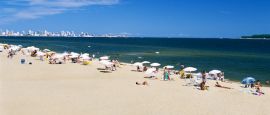
Days are warm to hot, with average maximum temperatures around 28°C (82°F) in Montevideo and higher temperatures inland. This is the main season for beaches, swimming and coastal nightlife. Punta del Este, José Ignacio and other Atlantic resorts are busiest and most expensive from late December through January, and accommodation should be booked well ahead. Montevideo is quieter in January as many residents leave for the coast.
Autumn (March to May):
Warm days, cooler evenings and fewer visitors make March and April particularly suitable for touring Montevideo, Colonia del Sacramento, the wine regions and the interior. The grape harvest takes place from February into March, when some wineries offer special activities. Temperatures become noticeably cooler during May.
Winter (June to August):
Conditions are cool, damp and often windy, especially along the coast. Average daytime temperatures in Montevideo are around 15°C (59°F), with colder nights and occasional frost inland. This is the quietest and least expensive season, suitable for museums, restaurants, thermal spas in northwestern Uruguay and whale-watching along the Atlantic coast, but not for a beach holiday.
Montevideo Carnival usually begins in late January and continues into February or early March. Visitors travelling for Carnival should check the dates and reserve accommodation in advance.
Lightweight clothing is suitable during summer, together with a sunhat, sunglasses and sunscreen. Bring a light jacket or jumper for cooler evenings and windy conditions along the coast.
In spring and autumn, pack layers, a warm jacket and a lightweight waterproof coat, as temperatures and weather conditions can change quickly. Winter requires warm clothing, including a coat, knitwear and waterproof outerwear; heating can be limited in some older buildings.
Comfortable walking shoes are useful throughout the year, while sturdier footwear is recommended for countryside walks. Smart-casual clothing is sufficient for most restaurants and evening venues.
Geography
Uruguay lies on the southeastern coast of South America, bordered by Brazil to the north and east, Argentina to the west, the Río de la Plata to the south and the Atlantic Ocean to the southeast. It is the second-smallest sovereign country in South America after Suriname.
The landscape consists mainly of gently rolling grasslands, broad river valleys and low ridges known as cuchillas. The Cuchilla de Haedo crosses the north and northwest, while the Cuchilla Grande extends through the east. Uruguay has no high mountains; its highest point, Cerro Catedral, rises to 514m (1,686ft) in the department of Maldonado.
The Uruguay River forms much of the western border, while the Río Negro flows across the centre of the country before joining it. Reservoirs created along the Río Negro provide hydroelectric power and form several large artificial lakes. Along the Atlantic coast, long sandy beaches, dunes, lagoons and wetlands extend through Maldonado and Rocha, contrasting with the more sheltered shores of the Río de la Plata around Montevideo and Colonia.
Do you have any Feedback about this page?
© 2026 Columbus Travel Media Ltd. All rights reserved. No part of this site may be reproduced without our written permission, click here for information on Columbus Content Solutions.



 You know where